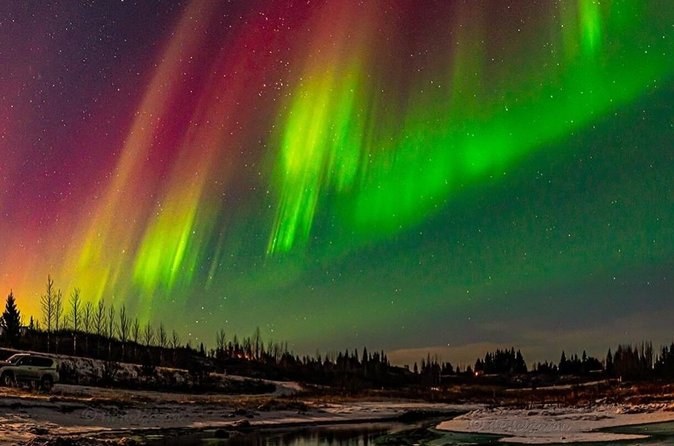
4 Hours Northern Lights Private Luxury Tour
PrivateGuideCrampons lent
Four hours after dark between roughly September and April, routed on the night's forecast and refunded when the sky does not cooperate.
From $1399 per group of up to 10
Three things, and only one of them is temperature. Daylight swings by roughly seventeen hours between the solstices. Road conditions swing from routine to closed. And the aurora is either on offer or it is not, with nothing in between.
Temperature barely moves by comparison, and it is the least useful thing to plan around. What decides your day is whether there is light in the window your connection gives you.
| Month | Daylight in Reykjavik | Aurora? | What the light allows |
|---|---|---|---|
| December | 4 to 5 hours | Yes | One stop in daylight, or an evening chase |
| January | 5 to 7 hours | Yes | The peninsula circuit, timed to midday |
| February | 7 to 10 hours | Best odds | Peninsula in full; the Circle at a push |
| March | 10 to 13 hours | To month end | The Golden Circle at normal timings |
| April | 13 to 16 hours | Fading | The south coast becomes possible |
| May | 17 to 20 hours | No | Everything, with light to spare |
| June | About 21 hours | No | Everything, at any hour of the connection |
| July | 19 to 21 hours | No | Everything, but avoid the middle of the day |
| August | 16 to 18 hours | From late in the month | Everything, plus an evening flight |
| September | 12 to 15 hours | Yes | The Circle, and the first aurora nights |
| October | 9 to 11 hours | Yes | Peninsula and Circle; watch the light going east |
| November | 6 to 8 hours | Yes | The peninsula, and an evening chase |
The two figures worth memorising are the extremes: about four hours around the December solstice, with the sun up near 11:20 and down near 15:30, and roughly twenty-one hours in late June with usable twilight either side of it.
Short, dark and often the better trip. November to March gives you between four and ten hours of light and a real chance of the aurora, and it puts snow on the lava fields that makes the peninsula look like nowhere else.
What it takes away is reach. Drive times run about a third longer, and the roads east of Reykjavik close often enough that Vegagerdin's live map at road.is is a daily check. Keep a winter connection on the Reykjanes peninsula, where Route 41 and Route 425 are cleared first, and put the evening to work instead of the afternoon.
Between about late September and early April, sometimes. You need darkness, a clear sky and geomagnetic activity at the same time, and the Met Office publishes the forecast at vedur.is.
The four-hour aurora product here does not pretend otherwise: it runs only when conditions are favourable and is cancelled and refunded or postponed when they are not. That policy is the reason it suits a connection. It costs you nothing to have booked it on a night that does not happen.
Long, easy and busy. May through August gives sixteen to twenty-one hours of daylight, every road is open, and a ten-hour connection behaves like a full day out. An evening arrival is as useful as a morning one, which is true nowhere else in the year.
The cost is other people. Gullfoss and Geysir carry the heaviest coach traffic between about 11:00 and 15:00 in July, which is exactly when a layover tends to be there. A private departure that can run the loop backwards is worth more in July than in any other month.
September and October, and then March. September still has twelve to fifteen hours of light, the coach traffic thins after the first week, the autumn colour around Kerid is at its best, and the aurora comes back. March runs the other way: light returning fast, the equinox bringing some of the year's most active aurora nights, and the roads reliable again.
Both give you most of summer's reach and most of winter's sky, which is a combination neither peak season offers.
It changes which band to book in. The same product takes the same hours in January and June; what changes is whether those hours are usable.
November to February: keep it on the peninsula, or book the aurora
departure and use the dark rather than fighting it.
March to April: the Golden Circle comes back into normal timings, and the
south coast becomes possible on a long connection.
May to August: anything, including an evening departure.
September to October: everything summer offers, plus the first aurora
nights, minus the crowds.
Not really, and that is an unusual thing to be able to say. Every month here has something the others do not: December has the aurora and almost no light, June has light and no aurora, July has everything and the crowds, February has the best aurora odds and icy ground.
If one month is harder than the rest it is January, and only because a five-hour window of daylight collides with the shortest connections. Even then the peninsula works, and the evening works better. What matters is matching the plan to the month rather than picking the month.
Wind is the constant, not cold. A windproof outer layer, a hat, gloves and shoes you do not mind getting wet cover almost every stop here in any month. In winter add a warm mid-layer and accept that the ground will be icy at the geothermal stops, where two of these products lend crampons.
Nothing you packed for a transatlantic cabin will do on its own. The horse ride is the exception: helmets, boots, rain gear and a warm overall are handed out at the stables.
Reykjanes has been volcanically active since 2021, and that is a fact of the region rather than a season. Fagradalsfjall erupted from 19 March 2021, and seismic activity around Grindavik in November 2023 forced the town's evacuation and began the Sundhnukur eruptions that ran into 2025.
The airport has kept operating throughout. What has moved repeatedly is access to specific places, the Blue Lagoon most of all. safetravel.is carries the official alerts and a standing page for the Reykjanes eruption area, and it is the site to check the week you travel rather than the month before.
Less than you would expect. The same products run all year, and two of them carry walking poles and crampons so that icy ground at a geothermal stop is an equipment question rather than a cancellation.
What the season changes is which of them makes sense. The aurora departure exists only between roughly September and April, because it needs darkness. The south-coast days are daylight-hungry and belong to April through September. The peninsula circuit is the one that works in every month of the year, which is why it sits in the featured three.
Three sites, and none of them is a weather app. Vegagerdin publishes live road conditions at road.is, the Met Office publishes warnings and the aurora forecast at vedur.is, and safetravel.is carries the official alerts including the standing page for the Reykjanes eruption area.
Check them the week you travel rather than the month before, and check road.is again the morning of the connection. A closure is a normal winter event here, and the useful question is not whether the weather is good but whether the road you need is open.
May, for hours and reach with no crowds yet. February, if the aurora is the point. September, if you want both and are willing to trade a little of each.
And if you do not get to choose — which is most readers, because the connection came with the ticket — the answer is the peninsula in winter and anything you like in summer. Short Iceland layover routes and layovers of six hours or more take it from there.
Four hours after dark between roughly September and April, routed on the night's forecast and refunded when the sky does not cooperate.
From $1399 per group of up to 10
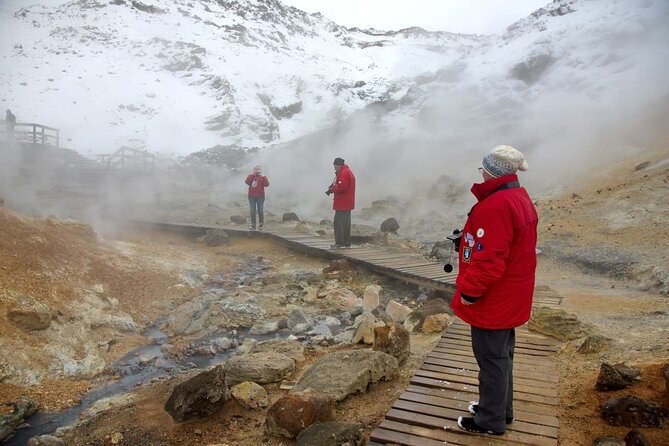
The all-weather answer. Short hops on cleared roads, four to five hours, one fare for the car.
From $1275 per group of up to 7
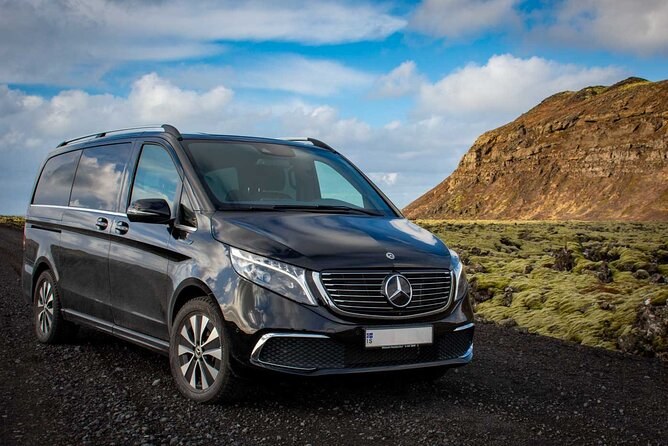
The long-daylight answer. Ten hours for up to five, with time to walk into the rift rather than look at it.
From $1989 per group of up to 5
Whatever month you land in, the weather and daylight page has the detail and the timing rules have the arithmetic. quick Reykjavik tour on an airport layover is the shortlist for a short winter gap, and Iceland Layover Tours compares every departure.